

A beautiful dinner table is rarely about having more things.
In fact, the tables that look most expensive often have less on them: fewer colors, fewer decorations, fewer unnecessary pieces of cutlery, and fewer objects fighting for attention. What they do have is balance. A clear drinking glass in the right place. A napkin with texture. A plate that feels grounded. A low centerpiece that does not interrupt conversation. A little reflection from glass catching the evening light.
This is where many home tables go wrong. People try to make a meal feel special by adding more decor, but the result can feel crowded instead of considered.
The better approach is quieter. Use glassware, spacing, texture, and proportion to make the table feel intentional. A well-placed clear glass can do more for a table than another candle, another flower stem, or another decorative object.
For VitraDecoration, this is the natural beauty of glassware: it decorates without shouting. It brings light, clarity, reflection, and rhythm to the table while still being useful.
Start With the Feeling, Not the Theme
Before choosing plates, flowers, or glass cups, decide what the table should feel like.
A relaxed family dinner needs a different mood from a birthday dinner. A summer lunch needs different materials from a winter gathering. A quiet minimalist table does not need the same pieces as a festive holiday setting.
Instead of starting with a “theme,” start with three words. For example:
|
Desired Feeling |
Best Table Direction |
Glassware Choice |
|
Calm and minimal |
White plates, linen, clear glass |
Simple tumblers or stemware |
|
Warm and rustic |
Wood, beige napkins, candles |
Slightly thicker clear glasses |
|
Modern and polished |
Stone, metal, symmetry |
Clean, straight-sided glassware |
|
Romantic |
Soft light, flowers, low candles |
Delicate clear glass cups |
|
Fresh and casual |
Light colors, fruit, herbs |
Everyday glass tumblers |
This keeps the table from becoming random. Every piece has a reason to be there.
The Glassware Rule Most People Miss
The fastest way to make a table look cluttered is to use too many types of glassware.
A water glass, wine glass, champagne flute, cocktail glass, decorative cup, and extra tumbler may look impressive in theory. In real life, it can make the table feel crowded before the food even arrives.
A thoughtful table only includes what the meal actually needs. Basic table settings usually include essentials like a plate, cutlery, napkin, and glass; more formal settings may add extra glassware depending on the courses and drinks served,
For most home dinners, one or two glasses per person are enough:
|
Meal Type |
Glassware Needed |
What to Skip |
|
Casual dinner |
Water glass |
Extra stemware |
|
Pasta night |
Water glass + wine glass if needed |
Champagne flutes |
|
Brunch |
Juice glass + water glass |
Formal wine glasses |
|
Outdoor dinner |
Sturdy tumbler |
Fragile or overly formal glassware |
|
Holiday dinner |
Water glass + wine glass |
Glasses for drinks not being served |
This is not about being less elegant. It is about being more edited.
Clear Glass Makes the Table Breathe
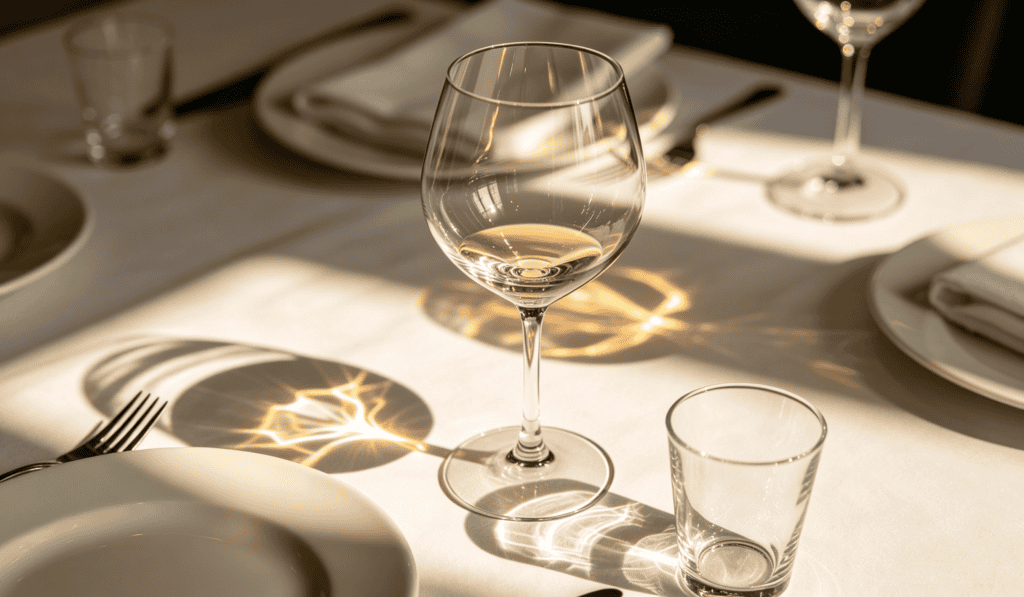
Clear glassware is one of the easiest ways to make a table feel lighter.
Unlike bold plates, colored napkins, or large floral arrangements, clear glass does not take up much visual space. It reflects what is around it: candlelight, linen, silverware, fruit, flowers, or the color of the drink. That makes it adaptable.
A clear glass cup can look casual at lunch, polished at dinner, and elegant beside candles. It does not force a specific style onto the table.
This is especially useful in smaller dining spaces. If the table is not large, heavy decor can quickly feel overwhelming. Clear glass helps preserve openness while still making the setting feel finished.
Height Matters More Than You Think
A table setting is a small landscape. It needs height, but not too much.
When everything is flat, the table can look unfinished. When everything is tall, guests cannot see each other. The best table styling uses low and medium-height pieces: glasses, small flowers, folded napkins, candles, serving bowls, and maybe one modest centerpiece.
Design publications often recommend creating dimension with varied objects, flowers, candles, and glassware, but balance is the key.
A practical formula:
Plates and linens create the base
Glassware adds vertical rhythm
Candles or flowers add atmosphere. Food brings color and abundance
Glassware is especially helpful because it adds height without heaviness. A clear glass has presence, but it does not block the view.
Keep the Center of the Table Low
One of the most common hosting mistakes is using a centerpiece that is too tall.
Tall flowers may look beautiful in a photo, but during dinner, they can become awkward. Guests lean around them, move them aside, or stop making eye contact across the table. A low arrangement is usually more comfortable for conversation.
Recent hosting advice often emphasizes using low centerpieces and avoiding unnecessary clutter so guests can interact easily.
Good low centerpiece ideas include:
|
Centerpiece Idea |
Why It Works |
|
A shallow bowl of fruit |
Adds color without blocking views |
|
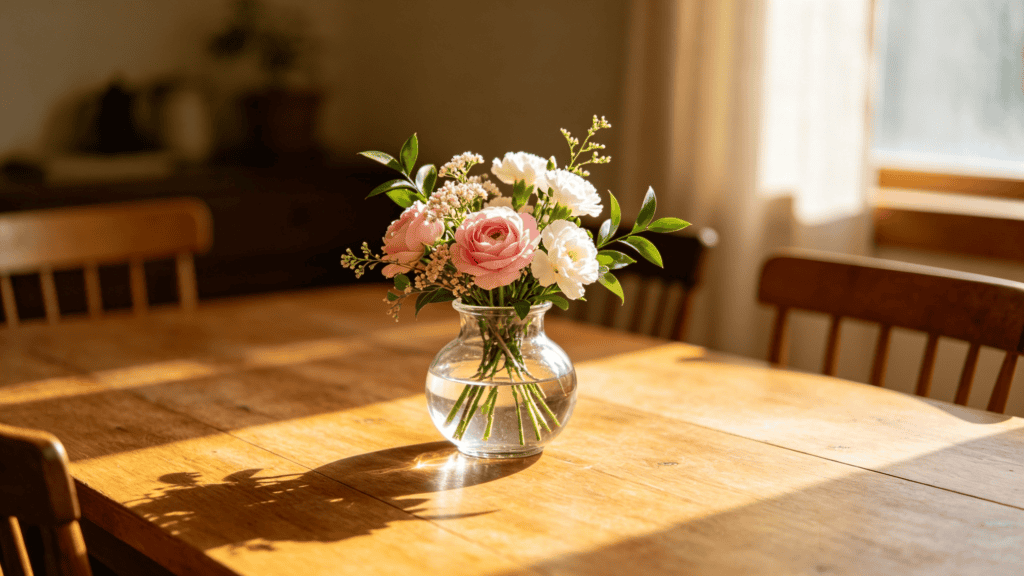
Small glass vases |
Reflect light and feel delicate |
|
Low candles |
Creates an atmosphere without height |
|
Fresh herbs |
Looks natural and smells subtle |
|
A linen runner |
Adds texture without bulk |
|
Clear glass decor pieces |
Adds reflection while staying light |
If the table is small, skip the centerpiece completely and let the glassware, napkins, and food do the styling.
Use Texture Instead of More Decoration
An elegant table does not need many objects. It needs contrast.
Glass is smooth and reflective, so it pairs beautifully with softer materials: linen, cotton, wood, ceramic, woven placemats, stone, or matte plates. This contrast makes the table feel layered without adding clutter.
Try these pairings:
|
Glassware Style |
Best Pairing |
Result |
|
Clear glass tumblers |
Linen napkins |
Soft and relaxed |
|
Ribbed glass cups |
Plain white plates |
Textured but clean |
|
Thin-rimmed glasses |
Matte ceramics |
Modern and refined |
|
Heavier glassware |
Wooden table |
Warm and grounded |
|
Simple stemware |
Candlelight |
Elegant and reflective |
Texture does the work that excessive decoration often tries to do. A wrinkled linen napkin beside a clear glass can feel more interesting than a table full of themed ornaments.

What Makes a Table Look Cheap
A table does not look cheap because the items are inexpensive. It looks cheap when the choices feel careless.
The biggest problems are usually visual noise and poor proportion.
Common mistakes include:
|
Mistake |
Why It Hurts the Table |
Better Choice |
|
Too many colors |
Makes the table feel chaotic |
Use 2–3 main colors |
|
Too many glasses |
Crowds each place setting |
Use only what the meal needs |
|
Tall centerpiece |
Blocks conversation |
Keep decor low |
|
Disposable-looking items |
Makes the setting feel temporary |
Use reusable pieces when possible |
|
Overly themed decor |
Can feel forced |
Use seasonal materials subtly |
|
Dirty or cloudy glassware |
Reduces freshness |
Polish glass before setting |
For outdoor tables especially, designers often warn against disposable tableware, excessive clutter, and overly formal drinkware that does not suit the setting.
This is why good glassware is useful. It can make even simple food feel more considered.
A Simple Formula for Everyday Elegance
Here is an easy structure for a dinner table that feels styled but not overdone:
|
Layer |
What to Use |
Styling Tip |
|
Base |
Tablecloth, runner, or bare wood |
Keep it clean and intentional |
|
Place setting |
Plate, napkin, cutlery |
Align pieces neatly |
|
Glassware |
One water glass, optional wine glass |
Place with consistent spacing |
|
Texture |
Linen, ceramic, wood, woven mat |
Avoid too many competing textures |
|
Light |
Candle, pendant light, natural light |
Soft light flatters glass |
|
Accent |
Small flowers, fruit, or greenery |
Keep it low and simple |
This formula works for weeknight dinners, small celebrations, holiday meals, and casual hosting. You can make it more formal by adding stemware and chargers, or more relaxed by using simple tumblers and a bare table.
How to Choose Glassware for Table Styling
When glassware is part of the table design, choose it with both function and appearance in mind. Look for four things:
Clarity
Clear glass should look bright, not dull. It should allow light to pass through beautifully.
Weight
A glass should feel stable without feeling clumsy. Very lightweight glass can feel delicate; heavier glass can feel grounded.
Rim thickness
A smoother, thinner rim usually feels more refined for sipping. A thicker rim can feel more casual and sturdy.
Shape
Straight sides feel modern. Rounded shapes feel softer. Ribbed textures create reflection and movement.
Do not assume glassware is dishwasher-safe, tempered, handmade, lead-free, or heat-resistant unless the product information clearly confirms it. Product details should always be verified before making
safety or care claims.
Setting the Table With VitraDecoration Glassware
VitraDecoration glassware can be styled as part of a larger home atmosphere rather than treated as a separate accessory.
For a minimalist dinner, pair clear glass cups with white plates and beige linen. For a warmer table, place glass tumblers on wood with amber candlelight. For a modern look, use clean-lined glassware with stone, black cutlery, or simple ceramics.
The goal is not to make the table look like a showroom. It should still feel lived-in, comfortable, and ready for food. Glassware works best when it supports that feeling: useful first, beautiful second, quietly
decorative all the time.

Final Takeaway
An elegant dinner table is not built by adding more. It is built by editing better.
Use fewer pieces. Choose glassware with intention. Let clear glass bring light and rhythm to the table. Keep centerpieces low, colors controlled, and textures balanced. Leave enough space for plates, hands, conversation, and the meal itself.
That is what makes a table feel expensive: not abundance, but attention.
A clear glass cup beside a folded napkin may seem like a small detail. But on a well-set table, small details are what guests remember.
FAQ
How do I make a dinner table look elegant without spending a lot?
Use fewer, better-chosen pieces. Clear glassware, clean plates, linen napkins, soft light, and a low centerpiece can make a simple table feel thoughtful without adding many decorations.
What glassware should I put on a dinner table?
For most home dinners, one water glass per person is enough. Add a wine glass only if wine is being served. Too many unused glasses can make the table look crowded.
Does clear glassware work with every table style?
Clear glassware is very flexible. It works with minimalist, rustic, modern, romantic, and seasonal tables because it reflects the surrounding materials instead of competing with them.
What is the biggest table styling mistake?
The biggest mistake is overdecorating. Too many colors, tall centerpieces, extra glassware, and unnecessary accessories can make the table feel cluttered.
Should a centerpiece be tall or low?
Low centerpieces are usually better for dinner because they allow guests to see and talk to each other easily.
How can VitraDecoration glassware be styled for hosting?
Pair VitraDecoration glass cups with simple plates, textured napkins, warm lighting, and low decor. Let the glassware add clarity and reflection while keeping the table comfortable for dining.