

The most useful objects in a kitchen are often the ones that never get put away. A measuring cup can be one of them. It measures water for tea, milk for a latte, cream for a recipe, syrup for a mocktail, or batter for pancakes. When it is made in clear glass with readable scale markings, a handle, and a controlled pour spout, it becomes more than a measuring tool. It becomes a small workhorse for daily drinks and home cooking.
A borosilicate glass measuring cup is a measuring vessel made from borosilicate glass, a glass type often chosen for kitchenware because it is designed to tolerate temperature changes better than ordinary glass. The practical value is simple: customers want one clear vessel that can measure, mix, pour, and sometimes serve without looking too utilitarian on the counter.
Why choose a glass measuring cup instead of plastic?
Plastic measuring cups are light and inexpensive, but glass has advantages for people who care about clarity, staining, and presentation. Clear glass makes it easier to see liquid color and level. It does not visually cloud the way some plastics can after repeated use. It also feels more appropriate when the measuring cup comes to the table as a milk cup, sauce pourer, or small beverage server.
What to look for in a borosilicate glass measuring cup
A measuring cup has to be accurate enough to trust, comfortable enough to lift, and controlled enough to pour without mess. The material matters, but the small design details matter just as much.
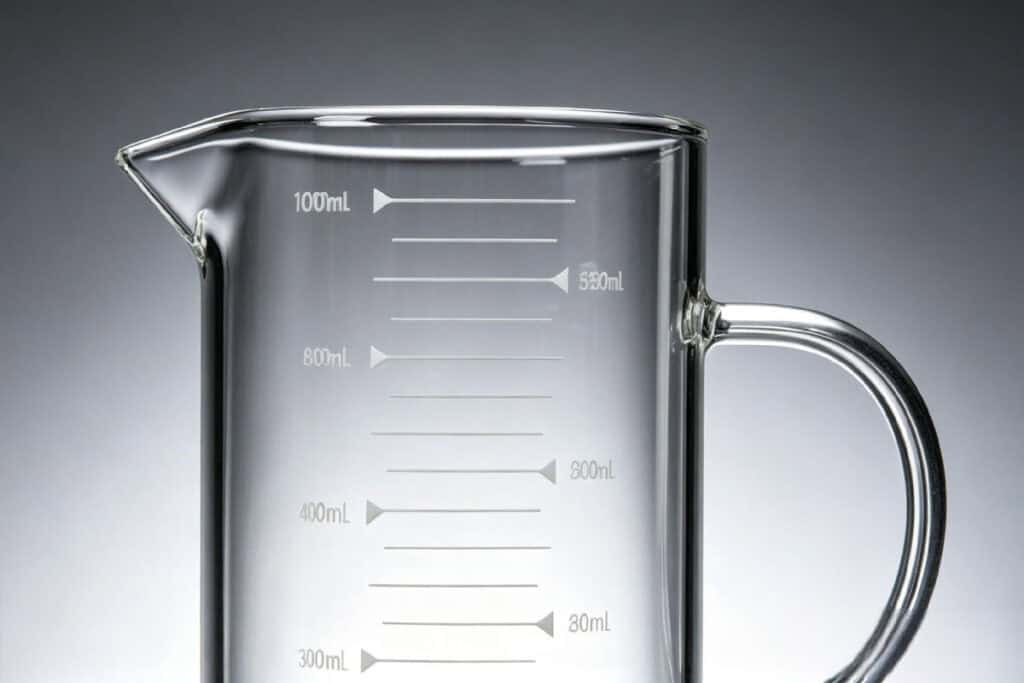
- Readable scale markings: Look for clear mL and oz marks that can be read from the side.
- Comfortable handle: A handle should feel secure when the cup is full, especially at larger sizes.
- Controlled pour spout: A defined spout helps direct milk, coffee, syrup, or batter into a cup, pan, or bowl.
- Useful sizes: Smaller cups suit coffee and tea prep; larger cups suit recipes, batch drinks, and family use.
- Care guidance: Check whether the exact product is listed as microwave-safe, dishwasher-safe, or refrigerator-safe before using it that way.
- Stable base: A measuring cup should sit flat and feel steady on a counter.
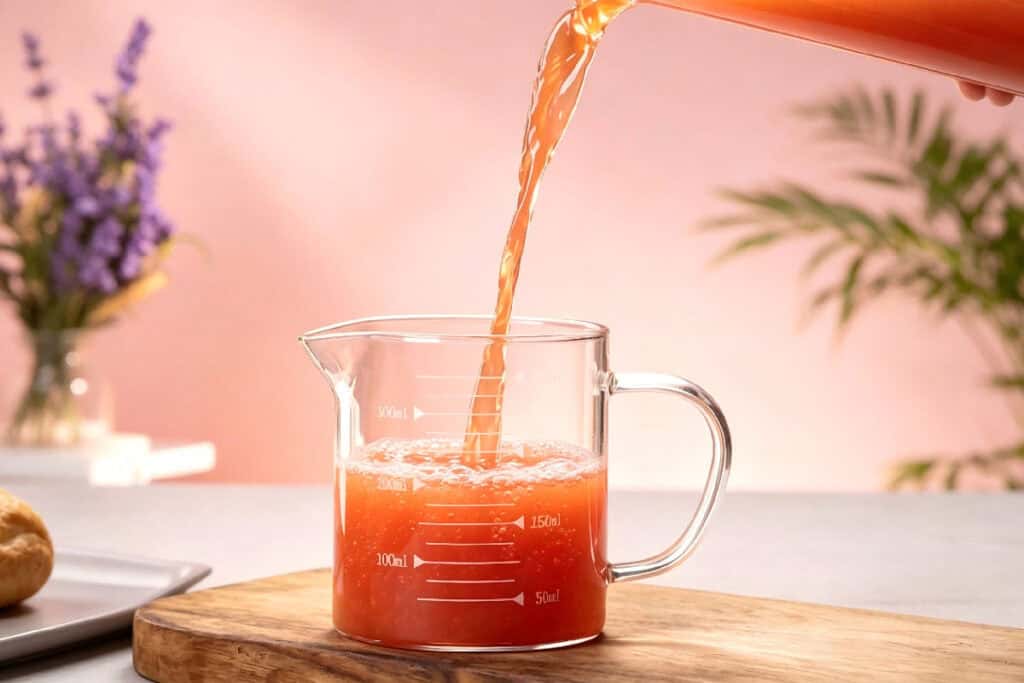
Choosing the right size: 350 ml, 500 ml, or 1000 ml
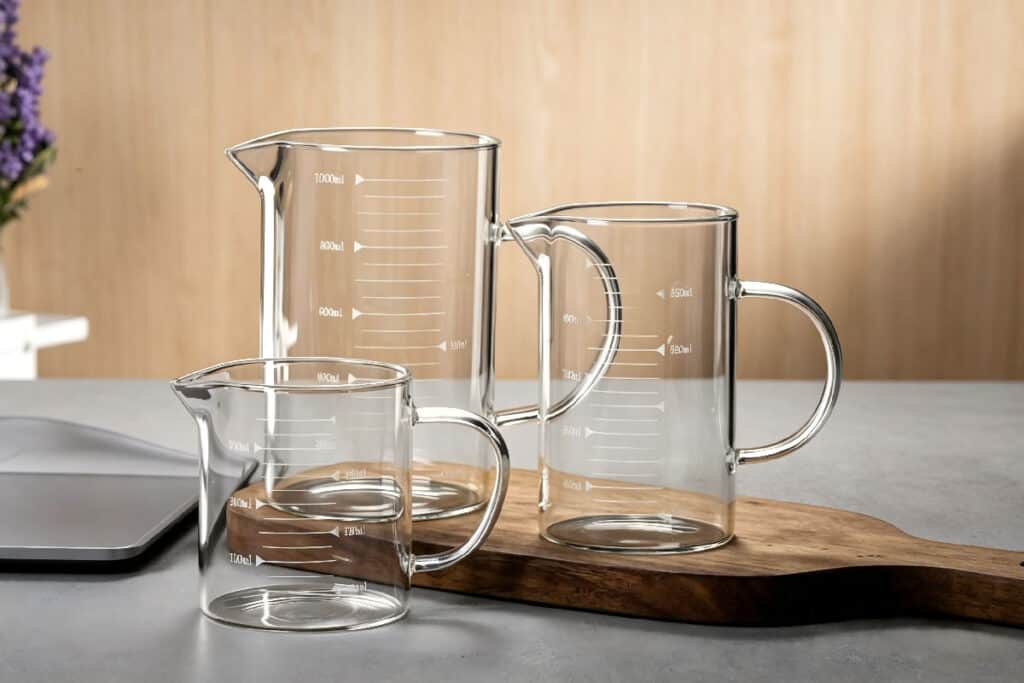
Size is one of the easiest ways to make the product relevant to different customers. A home barista may want a smaller measuring cup for milk, syrups, or single drinks. A baker may want a larger capacity for batters and recipe prep. A family kitchen may need the biggest size for batch beverages.
Size | Best For | Customer Angle |
350 ml | Small-batch coffee, tea, milk, syrup, precise liquid prep, and daily drinking. | Home barista, solo apartment, desk drink ritual |
500 ml | Everyday kitchen measuring, medium beverage serving, pancake batter, sauces, and regular prep. | Small household, practical kitchen tool, brunch prep |
1000 ml | Large recipes, batch brewing, iced tea, lemonade, and drinks for family or guests. | Family kitchen, hosting, batch beverage preparation |
Coffee, tea, and beverage uses
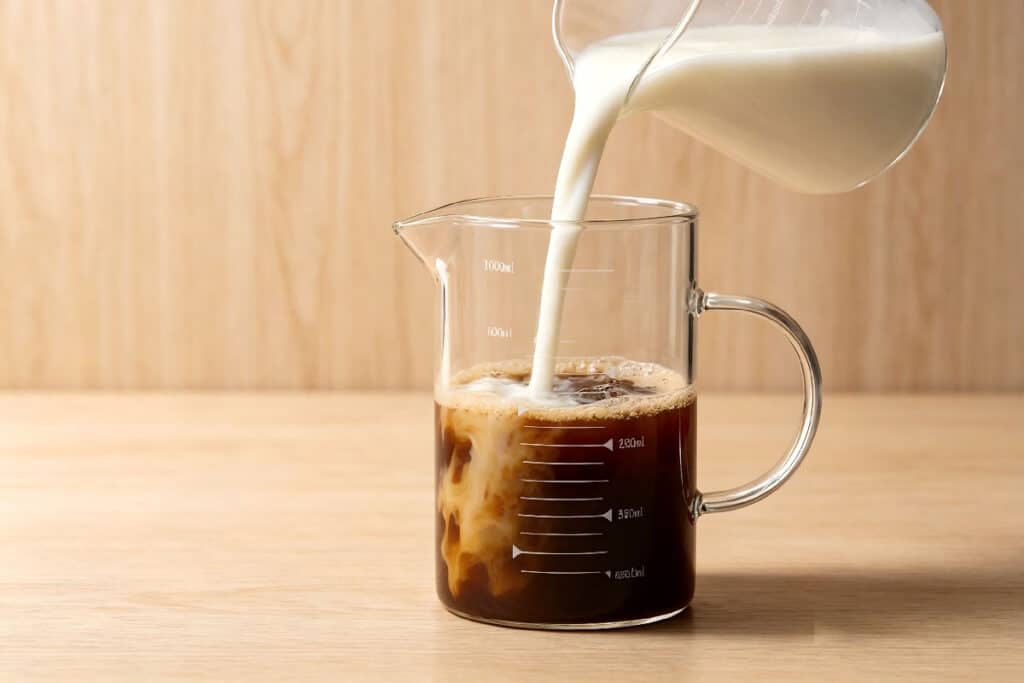
A measuring cup is especially useful for people who make drinks at home. It can measure water for pour-over coffee, milk for a latte, concentrate for cold brew, or syrup for a mocktail. Because the vessel is clear, users can see color and volume at the same time. Because it has a handle and spout, it can move from prep to pour without needing a second container.
Product connection: VitraDecoration Borosilicate Glass Measuring Cup
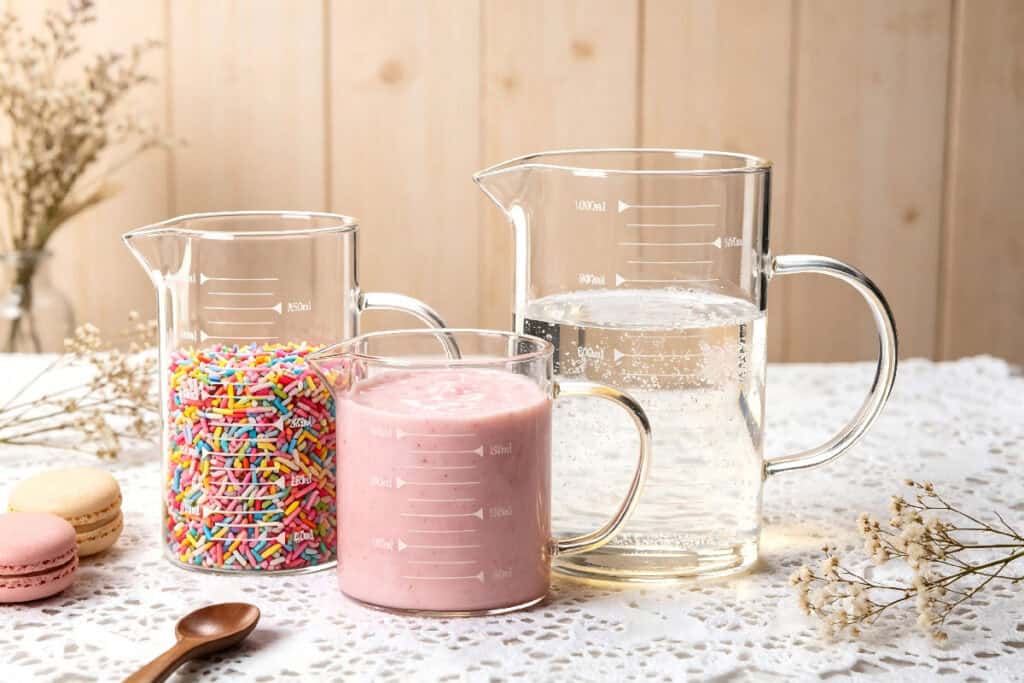
The VitraDecoration Borosilicate Glass Measuring Cup with Handle & Scale Markings is listed in 350 ml, 500 ml, and 1000 ml sizes. The product page positions it for liquid measuring, beverage serving, and daily drinking. It also describes mL and oz measurement marks, a pour spout, and a blown-glass handle.
Those details make the product more interesting than a basic utility item. The cup can be written as a clear measuring vessel for the kitchen and as a glass drinkware piece for people who like visible, functional tools. The best content angle is not “one cup does everything,” which sounds exaggerated. A stronger angle is: one clear vessel can move between measuring, mixing, pouring, and casual serving.
Because borosilicate and temperature safety claims can influence customer use, article copy should be precise. The current product page says the measuring cup is made from heat-resistant borosilicate glass and describes microwave, dishwasher, and refrigerator-safe use. In published content, keep those claims linked to this specific product and avoid extending them to all glass measuring cups. For customers, the safest advice is always to follow the latest product care label, avoid unnecessary shock, and inspect the glass before use.
How to make a measuring cup feel editorial
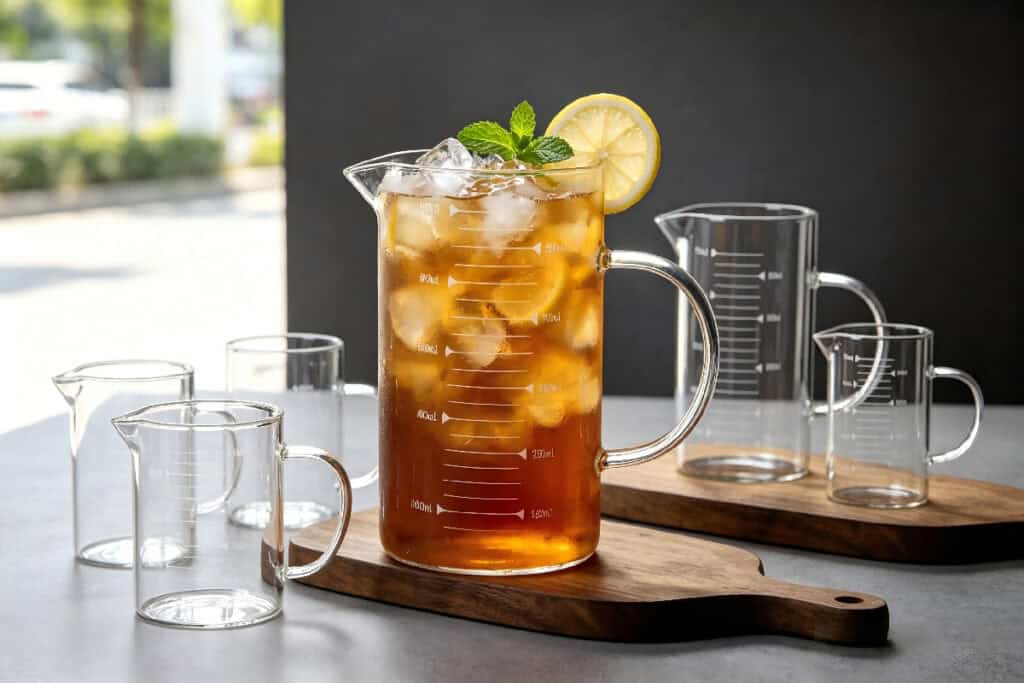
Kitchen utility content can become dull if the article only lists functions. To keep readers engaged, show the measuring cup in real moments: milk beside espresso, citrus syrup for sparkling water, oats soaking overnight, pancake batter waiting for a pan, or iced tea poured for two people. Clear glass gives these scenes a cleaner, lighter look than opaque plastic or stainless steel.
- Coffee station: Place the 350 ml cup beside espresso, milk, and ice to show scale markings in use.
- Baking counter: Use the 500 ml cup with eggs, flour, and a mixing bowl to show practical prep.
- Batch beverage: Fill the 1000 ml cup with iced tea, lemon slices, and herbs to show family-size serving.
Clear takeaways
A borosilicate glass measuring cup article can attract customers who begin with a practical kitchen search and end with a design-aware product discovery. The strongest article angle is versatility with control: readable marks, a secure handle, a pour spout, and sizes that support different routines. For VitraDecoration, this topic connects kitchen prep, coffee culture, beverage serving, and clear glass aesthetics in one useful article.
FAQ
Q: What is a borosilicate glass measuring cup?
A: It is a measuring vessel made from borosilicate glass, usually with scale markings, a handle, and a spout for measuring and pouring liquids.
Q: What size glass measuring cup should I buy?
A: A 350 ml size works well for coffee and small drinks, 500 ml suits everyday prep, and 1000 ml is better for batch recipes or family drinks.
Q: Can a glass measuring cup be used as drinkware?
A: Yes, if the shape is comfortable and the product is intended for beverage serving or daily drinking. Check the product description and care guidance.
Q: Is borosilicate glass heat-resistant?
A: Borosilicate glass is often selected for better thermal tolerance than ordinary glass, but exact microwave, dishwasher, refrigerator, or thermal-shock use depends on the specific product specifications.
Q: Why choose a glass measuring cup with a spout?
A: A spout helps control the pour, which is useful for milk, coffee, syrups, batters, sauces, and other liquids.