

How to Style Glassware in a Warm Minimalist Home
A warm minimalist home is not empty. It is edited.
The difference is in the details: the curve of a clear glass cup on a wooden tray, the way morning light passes through a ribbed tumbler, the soft reflection of water in a small vase beside a linen sofa. These quiet elements make a room feel lived-in without feeling crowded.
Glassware is one of the easiest ways to bring warmth, light, and function into a minimalist home. It does not demand attention like a bold sculpture or patterned décor piece. Instead, it works with what is already there: sunlight, drinks, flowers, candles, shelves, coffee tables, and daily routines.
In this guide, we will look at how to use glass cups, vases, drinkware, and decorative glass pieces to create a warm minimalist home that feels calm, practical, and personal.
What Is Warm Minimalism?
Warm minimalism combines the clean lines of minimalist design with softer textures, natural materials, and human details.
Traditional minimalism can sometimes feel cool or overly strict. Warm minimalism keeps the simplicity but adds comfort through materials such as wood, linen, ceramic, rattan, soft textiles, and clear or lightly tinted glass.
Instead of filling the home with many decorative objects, warm minimalism focuses on fewer pieces that have visual calm and everyday purpose.
Glassware fits naturally into this style because it offers:
Styling Need | How Glassware Helps |
Lightness | Transparent glass keeps surfaces from feeling heavy |
Texture | Ribbed, hammered, fluted, or handmade-style glass adds subtle detail |
Function | Cups, jars, pitchers, and vases are useful as well as decorative |
Reflection | Glass catches sunlight, candlelight, and ambient lighting |
Flexibility | Clear glass works with many color palettes and seasons |
The goal is not to display glassware everywhere. The goal is to place it thoughtfully so each piece feels intentional.
Start With Clear Glass for Visual Calm
Clear glass is a strong foundation for warm minimalist styling because it creates a sense of openness. It does not compete with wood grain, stone surfaces, neutral walls, or soft fabrics.
A simple clear tumbler on a bedside table, a glass carafe beside a reading chair, or a transparent vase on a console can make a space feel polished without adding visual clutter.
Clear glass works especially well in rooms with:
- Beige, ivory, cream, taupe, or greige walls
- Oak, walnut, or light wood furniture
- Linen curtains or textured upholstery
- Stone, marble, or microcement surfaces
- Soft natural light
Use Drinkware as Everyday Décor
In a warm minimalist home, décor should not only sit on a shelf. It should be part of daily life.
Glass cups are perfect for this because people use them every day. A beautiful cup can become part of a morning coffee ritual, an afternoon iced tea moment, or a quiet evening drink.
Instead of hiding all drinkware behind cabinet doors, consider displaying a small edited group:
- Two glass mugs on a coffee station
- A stack of low tumblers on an open kitchen shelf
- A glass pitcher with matching cups on a tray
- A pair of wine glasses beside a small vase for dinner styling
- A double-wall cup near a tea setup, if the product specifications support hot drink use
Keep the display small. Three to five pieces usually look more intentional than a full collection. Leave breathing space around the glassware so the transparency can be appreciated.

Pay Attention to Shape and Rim Thickness
Minimalist styling depends heavily on proportion. Even small differences in glassware shape can change the feeling of a room or table.
A tall, straight-sided glass feels clean and modern. A rounded glass feels softer and more relaxed. A stemmed glass adds height and formality. A low tumbler feels grounded and casual.
Rim thickness also affects the visual impression. A thinner rim often looks delicate and refined, while a thicker rim can feel more relaxed and durable. For everyday drinkware, customers often care about both beauty and comfort: how the cup feels in the hand, whether the base feels stable, and whether the rim feels pleasant when drinking.
When writing product descriptions or creating social media content, avoid vague words such as “perfect” or “luxury.” Instead, describe what customers can actually notice:
- The curve of the cup
- The weight in the hand
- The clarity of the glass
- The thickness of the base
- The way the rim meets the lips
- The reflection under natural light
These concrete details make glassware feel real and desirable.
Add Warmth With Tinted or Textured Glass
Clear glass is timeless, but tinted glass can add warmth without overwhelming a room.
Soft amber, smoky grey, tea brown, pale green, or champagne-toned glass can create a gentle mood, especially in living rooms, dining areas, or bedside spaces. These colors work well with wood, woven materials, dried flowers, and warm lighting.
Textured glass also helps minimalist interiors feel less flat. Ribbed glass, fluted glass, bubble glass, hammered glass, or subtle vertical patterns can add movement while keeping the overall look calm.
Use textured glass when a space needs:
- A little more depth
- A vintage-inspired detail
- A stronger light reflection
- A tactile surface for close-up photography
- A decorative effect without bright color
For example, a ribbed glass cup beside a linen napkin and wooden tray can look more layered than a plain cup alone. The styling is still simple, but it has more visual interest.

Style Glassware With Natural Materials
Glass becomes warmer when paired with materials that have texture.
A clear cup on a cold white surface may look clean, but it can also feel too sharp. Place the same cup on a wooden tray, beside a woven coaster, or near a linen napkin, and the mood changes immediately.
Good pairings include:
|
Glassware Piece |
Warm Pairing |
|
Clear tumbler |
Oak tray, cotton napkin, lemon water |
|
Glass mug |
Ceramic plate, linen cloth, coffee beans |
|
Small vase |
Dried stems, stone surface, warm lamp light |
|
Glass pitcher |
Wooden table, sliced citrus, simple cups |
|
Decorative jar |
Rattan basket, shelf styling, neutral books |
The key is balance. Glass brings clarity and reflection. Natural materials bring softness and texture.
Create Small Ritual Zones
Warm minimalist homes often feel inviting because they support small daily rituals.
A ritual zone is a small area designed around one habit: coffee, tea, reading, skincare, journaling, entertaining, or winding down at night.
Glassware can help define these zones.
For a coffee corner, style a glass mug, small spoon, coffee beans, and a neutral tray. For a tea area, use a clear cup, teapot, and small dish for lemon or honey. For a bedside table, place a water glass, carafe, book, and small floral stem.
These little setups make the home feel personal without adding unnecessary décor.
Use Glass Vases for Seasonal Minimalism
A glass vase is one of the most flexible decorative pieces in a home. It can change with the season while the base object stays the same.
In spring, use a few fresh stems. In summer, try green branches or simple white flowers. In autumn, use dried grasses or warm-toned leaves. In winter, use bare branches, pine, or a single sculptural stem.
For a minimalist look, avoid overcrowding the vase. One to five stems can be enough, depending on the size and shape of the vessel.
A transparent vase also lets the water and stems become part of the visual composition. This is especially beautiful in natural light, where the glass, waterline, and shadow create quiet detail.
Keep Open Shelves Edited
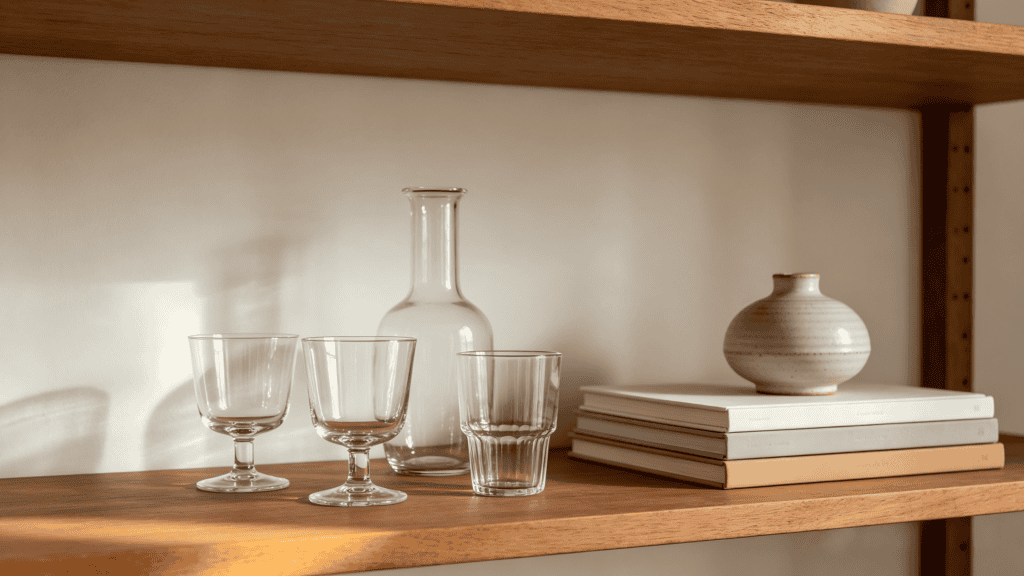
Open shelves can easily become busy. If you use glassware as shelf décor, think in groups and negative space.
A good shelf arrangement might include:
- One stack of clear glasses
- One small vase
- One neutral book
- One warm material, such as wood or ceramic
Avoid lining up too many similar glasses across the whole shelf. Instead, create small moments with space between them.
For example, place three tumblers on one side, a small plant or vase on the other, and leave the center slightly open. This makes the shelf feel styled rather than crowded.
Make the Dining Table Feel Effortless
Glassware has a strong effect on table styling because it catches light at eye level.
For a warm minimalist table, start with simple foundations: a neutral tablecloth or bare wooden table, plain plates, linen napkins, and clear or softly tinted glasses.
Then add one focal detail, such as:
- A low glass vase with seasonal stems
- A water carafe in the center
- Amber glasses for a warmer evening mood
- Clear wine glasses with candlelight reflection
- Small glass bowls for fruit, olives, or dessert
The table should feel comfortable, not staged. Leave enough room for serving dishes and conversation.

Avoid Overdecorating With Glass
Glassware looks best when it has room to breathe. Too many transparent pieces together can create visual noise, especially if there are many reflections.
A helpful rule is to mix glass with matte textures. If you have a glass vase, add a wooden tray. If you have clear cups, place them near linen. If you have a glass pitcher, pair it with ceramic plates or natural foliage.
This contrast prevents the room from feeling cold or overly shiny.
Care and Safety Notes for Glassware Styling
Beautiful styling should still be practical.
Before using glassware for hot drinks, dishwashers, microwaves, freezers, or candles, always check the product specifications. Different glass types and production methods can perform differently. Borosilicate glass, soda-lime glass, tempered glass, handmade glass, and decorative glass are not interchangeable.
For product pages, VitraDecoration should only claim heat resistance, dishwasher safety, microwave safety, lead-free composition, or food safety when those details are verified by supplier specifications or testing documents.
For everyday care, general advice includes:
- Avoid sudden temperature changes unless the glass is specifically designed for that use
- Place delicate glassware separately in the dishwasher if dishwasher use is confirmed
- Use soft cloths to reduce water spots
- Store glasses with enough space to prevent rim chipping
- Avoid using decorative-only glassware for food or drinks unless marked food-safe
Clear care guidance builds trust and reduces customer hesitation.
How Glassware Supports the Warm Minimalist Look
The beauty of glassware is that it can be useful, decorative, and emotional at the same time.
A glass cup is not only a cup. It can show the color of matcha, the foam of iced coffee, the steam of tea, or the sparkle of fruit water. A vase is not only a vase. It can hold flowers, branches, shadows, and seasonal mood. A pitcher is not only a serving piece. It can become the center of a table.
For VitraDecoration, this creates a natural content opportunity: show glassware as part of real home moments, not isolated objects. Customers want to imagine how a piece will look on their table, in their kitchen, beside their sofa, or in their daily routine.
Warm minimalism is not about having less for the sake of less. It is about choosing pieces that earn their place.
Glassware earns its place when it brings clarity, reflection, function, and quiet beauty into the home.
Key Takeaways
Warm minimalist styling works best when glassware is used with intention. Choose clear glass for visual calm, textured glass for subtle detail, and tinted glass for warmth. Pair glass with wood, linen, ceramic, stone, or natural stems to keep the look soft and livable.
Most importantly, use glassware where life actually happens: beside the coffee machine, on the dining table, near the sofa, on a bedside table, or in a small ritual corner. That is where simple objects become part of the home.
FAQ
Is glassware good for minimalist home décor?
Yes. Glassware works well in minimalist décor because it is functional, transparent, and visually light. Clear glass adds reflection without making a room feel crowded.
What glassware colors work best in a warm minimalist home?
Clear glass is the most flexible choice. Soft amber, smoky grey, pale green, champagne, and tea-brown glass can also work well when paired with wood, linen, and neutral interiors.
How do I display glass cups without making shelves look cluttered?
Display a small group of three to five pieces and leave space around them. Mix glass with matte materials such as ceramic, wood, books, or woven textures.
Can drinkware be used as decoration?
Yes. Glass cups, mugs, pitchers, and carafes can become part of coffee stations, tea corners, dining tables, and bedside styling while still being useful every day.
What should I check before using glass cups for hot drinks?
Check the product specifications. Not all glass is suitable for hot liquids, microwaves, dishwashers, or sudden temperature changes. Heat resistance and safety claims should be verified before use.